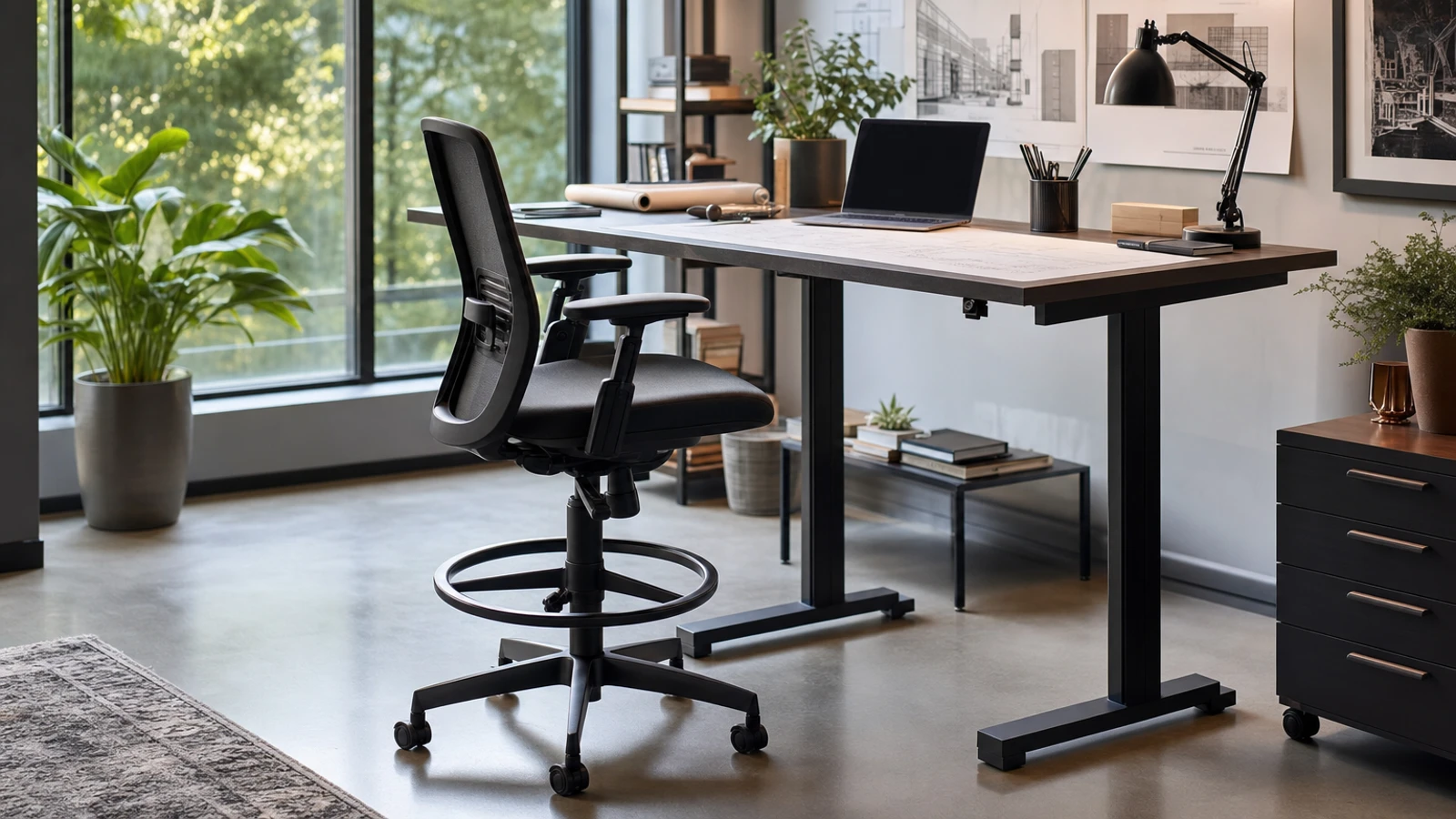
This support page focuses on back support, lumbar shape, and upright work for office drafting chairs. Product comparisons belong on the main shortlist, while this page stays focused on setup decisions and daily fit.
Back Support, Lumbar Shape, and Upright Work
Tall-seat fit. A drafting chair has to match higher desks, counters, reception stations, studio benches, and standing-height work surfaces. Seat height is only useful when the user can still reach the floor ring, keyboard, and work surface comfortably. For back support, lumbar shape, and upright work, compare the chair during a real work block: sitting down at a tall surface, placing feet on the ring, typing, leaning back briefly, rolling aside, and standing up without the base feeling awkward.
Measure seat-height range, work-surface height, foot-ring placement, arm clearance, caster behavior, and storage space. A drafting chair can be excellent when it fits the station, but frustrating when it is treated like a normal low office chair.
Foot-ring support. The foot ring is not decoration. It gives feet a reliable landing place when the chair is too tall for the floor, helping the user avoid dangling legs or awkward pressure behind the knees. For back support, lumbar shape, and upright work, compare the chair during a real work block: sitting down at a tall surface, placing feet on the ring, typing, leaning back briefly, rolling aside, and standing up without the base feeling awkward.
Measure seat-height range, work-surface height, foot-ring placement, arm clearance, caster behavior, and storage space. A drafting chair can be excellent when it fits the station, but frustrating when it is treated like a normal low office chair.
Back shape. Drafting chairs often keep users more upright than lounge-style office chairs. Back support should feel steady during typing, drawing, labelling, checking inventory, or rotating between a tall table and nearby shelves. For back support, lumbar shape, and upright work, compare the chair during a real work block: sitting down at a tall surface, placing feet on the ring, typing, leaning back briefly, rolling aside, and standing up without the base feeling awkward.
Measure seat-height range, work-surface height, foot-ring placement, arm clearance, caster behavior, and storage space. A drafting chair can be excellent when it fits the station, but frustrating when it is treated like a normal low office chair.
Base behavior. A taller chair needs a predictable base. Casters, floor type, chair height, user movement, and desk clearance all affect whether the chair feels safe and calm during normal work. For back support, lumbar shape, and upright work, compare the chair during a real work block: sitting down at a tall surface, placing feet on the ring, typing, leaning back briefly, rolling aside, and standing up without the base feeling awkward.
Measure seat-height range, work-surface height, foot-ring placement, arm clearance, caster behavior, and storage space. A drafting chair can be excellent when it fits the station, but frustrating when it is treated like a normal low office chair.
Shared workstations. Drafting chairs are common in studios, labs, classrooms, salons, counters, and shared offices. Clear adjustment controls and durable materials matter more when multiple people use the same chair. For back support, lumbar shape, and upright work, compare the chair during a real work block: sitting down at a tall surface, placing feet on the ring, typing, leaning back briefly, rolling aside, and standing up without the base feeling awkward.
Measure seat-height range, work-surface height, foot-ring placement, arm clearance, caster behavior, and storage space. A drafting chair can be excellent when it fits the station, but frustrating when it is treated like a normal low office chair.
Buyer caution. This guide is buying support, not a claim of hands-on testing or medical advice. Current dimensions, weight ratings, warranty terms, and return rules should be verified before purchase. For back support, lumbar shape, and upright work, compare the chair during a real work block: sitting down at a tall surface, placing feet on the ring, typing, leaning back briefly, rolling aside, and standing up without the base feeling awkward.
Measure seat-height range, work-surface height, foot-ring placement, arm clearance, caster behavior, and storage space. A drafting chair can be excellent when it fits the station, but frustrating when it is treated like a normal low office chair.
Tall-seat fit. A drafting chair has to match higher desks, counters, reception stations, studio benches, and standing-height work surfaces. Seat height is only useful when the user can still reach the floor ring, keyboard, and work surface comfortably. For practical checklist for back support, lumbar shape, and upright work, compare the chair during a real work block: sitting down at a tall surface, placing feet on the ring, typing, leaning back briefly, rolling aside, and standing up without the base feeling awkward.
Measure seat-height range, work-surface height, foot-ring placement, arm clearance, caster behavior, and storage space. A drafting chair can be excellent when it fits the station, but frustrating when it is treated like a normal low office chair.
Foot-ring support. The foot ring is not decoration. It gives feet a reliable landing place when the chair is too tall for the floor, helping the user avoid dangling legs or awkward pressure behind the knees. For practical checklist for back support, lumbar shape, and upright work, compare the chair during a real work block: sitting down at a tall surface, placing feet on the ring, typing, leaning back briefly, rolling aside, and standing up without the base feeling awkward.
Measure seat-height range, work-surface height, foot-ring placement, arm clearance, caster behavior, and storage space. A drafting chair can be excellent when it fits the station, but frustrating when it is treated like a normal low office chair.
Back shape. Drafting chairs often keep users more upright than lounge-style office chairs. Back support should feel steady during typing, drawing, labelling, checking inventory, or rotating between a tall table and nearby shelves. For practical checklist for back support, lumbar shape, and upright work, compare the chair during a real work block: sitting down at a tall surface, placing feet on the ring, typing, leaning back briefly, rolling aside, and standing up without the base feeling awkward.
Measure seat-height range, work-surface height, foot-ring placement, arm clearance, caster behavior, and storage space. A drafting chair can be excellent when it fits the station, but frustrating when it is treated like a normal low office chair.
Base behavior. A taller chair needs a predictable base. Casters, floor type, chair height, user movement, and desk clearance all affect whether the chair feels safe and calm during normal work. For practical checklist for back support, lumbar shape, and upright work, compare the chair during a real work block: sitting down at a tall surface, placing feet on the ring, typing, leaning back briefly, rolling aside, and standing up without the base feeling awkward.
Measure seat-height range, work-surface height, foot-ring placement, arm clearance, caster behavior, and storage space. A drafting chair can be excellent when it fits the station, but frustrating when it is treated like a normal low office chair.
Shared workstations. Drafting chairs are common in studios, labs, classrooms, salons, counters, and shared offices. Clear adjustment controls and durable materials matter more when multiple people use the same chair. For practical checklist for back support, lumbar shape, and upright work, compare the chair during a real work block: sitting down at a tall surface, placing feet on the ring, typing, leaning back briefly, rolling aside, and standing up without the base feeling awkward.
Measure seat-height range, work-surface height, foot-ring placement, arm clearance, caster behavior, and storage space. A drafting chair can be excellent when it fits the station, but frustrating when it is treated like a normal low office chair.
Buyer caution. This guide is buying support, not a claim of hands-on testing or medical advice. Current dimensions, weight ratings, warranty terms, and return rules should be verified before purchase. For practical checklist for back support, lumbar shape, and upright work, compare the chair during a real work block: sitting down at a tall surface, placing feet on the ring, typing, leaning back briefly, rolling aside, and standing up without the base feeling awkward.
Measure seat-height range, work-surface height, foot-ring placement, arm clearance, caster behavior, and storage space. A drafting chair can be excellent when it fits the station, but frustrating when it is treated like a normal low office chair.
Use the main hub and related support pages to compare tall-workstation questions before choosing a drafting chair.